Sacha Inchi vs. Chia Seeds: The Plant-Based Omega-3 Comparison for Formulators
Published on May 18, 2026 · By Caleb Lim, Founder · Asia Eco Farm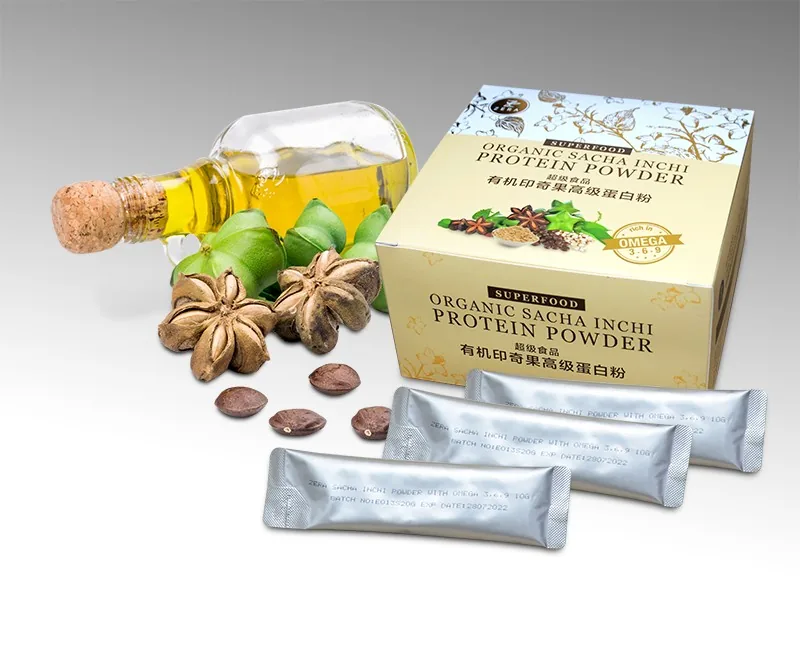
Chia seeds became a mainstream superfood ingredient in the early 2010s and remain a staple across functional foods, plant-based nutrition, and supplement categories. Their omega-3 credentials are strong, and consumer recognition is high. So when supplement and food brands discover Sacha Inchi, the immediate question is: how does it compare?
The answer depends heavily on what your product needs to do. Both ingredients carry meaningful omega-3 content and broad vegan appeal, but they diverge significantly in protein quality, formulation behaviour, flavour impact, and the kind of marketing narrative they support. This guide breaks down the comparison from a B2B formulation perspective.
Quick Comparison: Sacha Inchi vs. Chia Seeds
| Factor | Sacha Inchi | Chia Seeds |
|---|---|---|
| Omega-3 (ALA) — oil basis | 41–50% | ~58–65% |
| Omega-3 (ALA) — whole seed basis | ~14–17g per 100g seed | ~17–19g per 100g seed |
| Protein content (whole seed) | 27–33% | ~16–20% |
| Protein completeness | Complete (all EAAs) | Nearly complete (low lysine) |
| Vitamin E content (oil) | ~175–220 mg/100g | ~3–5 mg/100g |
| Fibre content | Low (oil/powder form) | ~34g/100g — very high |
| Formulation texture | Neutral (oil) / smooth (powder) | Gelling behaviour limits applications |
| Consumer recognition | Growing | Very high |
| Sustainability positioning | Carbon-negative farming (SE Asia) | Standard annual crop (South America) |
| USDA Organic available | Yes (Asia Eco Farm) | Yes (widely available) |
Omega-3 Content: Both Are Strong, Context Matters
On a pure ALA-percentage basis, chia seed oil edges ahead of Sacha Inchi oil — 58–65% ALA versus 41–50%. On a whole-seed basis, the gap narrows considerably because chia seeds contain roughly 30–33% fat by weight, while Sacha Inchi seeds contain 35–54% fat. The resulting omega-3 delivery per 100g of whole seed is broadly comparable.
For supplement formulators working with oils or concentrated extracts, both can be used to support an "excellent source of plant-based omega-3" claim in most regulatory environments. The differentiation lies not in omega-3 level but in everything that surrounds it: vitamin E content, protein co-delivery, stability, and product texture.
Protein Quality: A Significant Differentiator
This is where the comparison shifts decisively in Sacha Inchi's favour for certain product categories. Sacha Inchi seeds yield a protein meal containing 27–33% protein with a complete essential amino acid profile — including all nine essential amino acids at meaningful levels. This makes Sacha Inchi protein one of the very few plant proteins that can legitimately claim completeness without amino acid blending.
Chia seeds provide approximately 16–20% protein by weight, with a near-complete profile that is slightly low in lysine. Chia protein is rarely extracted for standalone protein supplement use due to the technical complexity of separating it from the seeds' high fibre and mucilage content. Chia is far more commonly used as a whole seed or ground meal ingredient rather than as a protein concentrate.
For brands building a dual omega-3 + protein product — a growing category in sports nutrition, active nutrition, and plant-based meal replacements — Sacha Inchi is the clear choice. The same raw material delivers both a high-quality oil (omega-3) and a usable protein powder, without the processing complexity that chia protein extraction demands.
Chia's Gelling Behaviour: Opportunity or Constraint?
Chia seeds are well known for their hydrophilic mucilage — when wet, they absorb up to 12 times their weight in liquid and form a thick gel. This property is simultaneously chia's biggest functional advantage (texture in puddings, hydration gels, and egg replacement) and its biggest formulation constraint.
For supplement tablets, capsules, and most powdered drink mixes, chia's gelling behaviour creates manufacturing challenges: flow issues in tablet presses, clumping in stick packs, and inconsistent hydration times in powder blends. Chia oil, extracted separately, avoids these issues but loses the fibre and mucilage benefits.
Sacha Inchi oil and protein powder are clean, dry-process ingredients that integrate predictably into capsule fills, protein powder blends, softgel encapsulation, and liquid supplements without gelling interference. For contract manufacturers running standard supplement lines, Sacha Inchi is a lower-friction ingredient to work with at scale.
Vitamin E: Sacha Inchi Has No Peer
Sacha Inchi oil's tocopherol content (~175–220 mg per 100g) is dramatically higher than chia seed oil (~3–5 mg/100g) — a roughly 40-fold difference. As covered in the oxidative stability section, this Vitamin E acts as a natural preservative during storage, reducing the need for added antioxidants in bulk packaging.
From a label perspective, it also allows a Sacha Inchi oil product to carry a Vitamin E source claim. Chia, by contrast, does not offer this. For premium supplement brands looking to maximise the nutrient density per ingredient slot on their label, Sacha Inchi oil packs significantly more per serving.
Fibre Content: Chia's Unique Advantage
Chia seeds are one of the richest dietary fibre sources available, with approximately 34g fibre per 100g of whole seeds — primarily soluble fibre (mucilage) that supports digestive health and satiety. This is a genuinely differentiated nutritional benefit that Sacha Inchi oil and protein powder do not replicate.
For brands targeting digestive health, weight management, or blood sugar support, chia's fibre content is a significant clinical selling point. Sacha Inchi does not compete here. The right answer for a brand whose product brief includes fibre benefits is chia or a chia + Sacha Inchi combination ingredient stack — not a direct substitution.
Consumer Recognition and Marketing
Chia's mainstream recognition is high — it is a known ingredient to most health-conscious consumers globally. This reduces the educational burden on pack copy and advertising. However, it also means chia has limited "novelty premium" left; consumer willingness to pay a premium for chia has normalised over the past decade.
Sacha Inchi is in its growth phase. Consumer awareness is concentrated in specialist health markets but expanding rapidly alongside the broader superfood narrative. For brands positioning themselves as ahead of the curve — targeting early adopter nutritionistas, B2B wellness buyers, or sustainability-oriented procurement teams — Sacha Inchi's relative novelty supports premium pricing and differentiated storytelling that chia can no longer provide.
Sustainability Sourcing: An Emerging Brand Differentiator
Commercial chia production is concentrated in South American countries — primarily Mexico, Bolivia, and Paraguay. It is an annual crop with a conventional supply chain offering no particular environmental story.
Sacha Inchi's Southeast Asian origin gives it a genuinely distinctive sourcing narrative. Asia Eco Farm's perennial vine cultivation in Laos and Malaysia operates under carbon-negative farming principles, certified USDA Organic. This allows downstream brands to claim Southeast Asian provenance and carbon-negative sourcing — claims that resonate with the growing number of corporate ESG procurement teams requiring sustainability credentials from ingredient suppliers.
B2B Use Case Guide: Sacha Inchi vs. Chia by Product Category
| Product Category | Recommended | Reason |
|---|---|---|
| Omega-3 softgel capsules | Sacha Inchi Oil | Extractable oil, better stability, Vit E co-benefit |
| Plant-based protein powder | Sacha Inchi Protein | Complete amino acids, higher protein %, cleaner texture |
| Chia pudding / breakfast products | Chia Seeds | Gelling is a feature here; Sacha Inchi has no gelling equivalent |
| Digestive health / high-fibre supplement | Chia Seeds | Chia's soluble fibre content is unmatched |
| All-in-one plant nutrition (omega-3 + protein) | Sacha Inchi | Single-source oil + protein from same supply chain |
| Functional beverages (smoothies, RTD) | Sacha Inchi Oil (emulsified) | Avoids chia gelling in liquid; neutral flavour |
| Premium cosmetics / face oil | Sacha Inchi Oil | High Vit E, non-comedogenic; no chia oil equivalent at scale |
Sourcing Sacha Inchi from Southeast Asia
Most global chia supply originates in Latin America and travels considerable distances to reach Asian and European manufacturing facilities. For brands building Asia-Pacific supply chains or seeking to reduce carbon from transportation, Southeast Asian Sacha Inchi presents a logistics advantage.
Asia Eco Farm operates integrated farm-to-factory operations in Malaysia and Laos, with business registration in Singapore. We supply cold-pressed Sacha Inchi oil (bulk drums, private label bottles), Sacha Inchi protein powder (bulk bags, private label sachets), and ODM Sacha Inchi softgel capsules. Our standard supply chain supports MOQs starting from 50 L for oil and 100 kg for protein powder — accessible to smaller brands building initial SKUs without requiring full container commitments.
Related Articles
Evaluate Sacha Inchi for Your Next Formulation
Request a sample of Sacha Inchi oil or protein powder — USDA Organic certified, shipped from our Southeast Asia facilities. MOQ and spec sheets available on request.
Request a Sample → View Product Specs