Is Rice Protein a Complete Protein? The Lysine Gap, Explained for Formulators
Published on September 1, 2026 · By Caleb Lim, Founder · Asia Eco Farm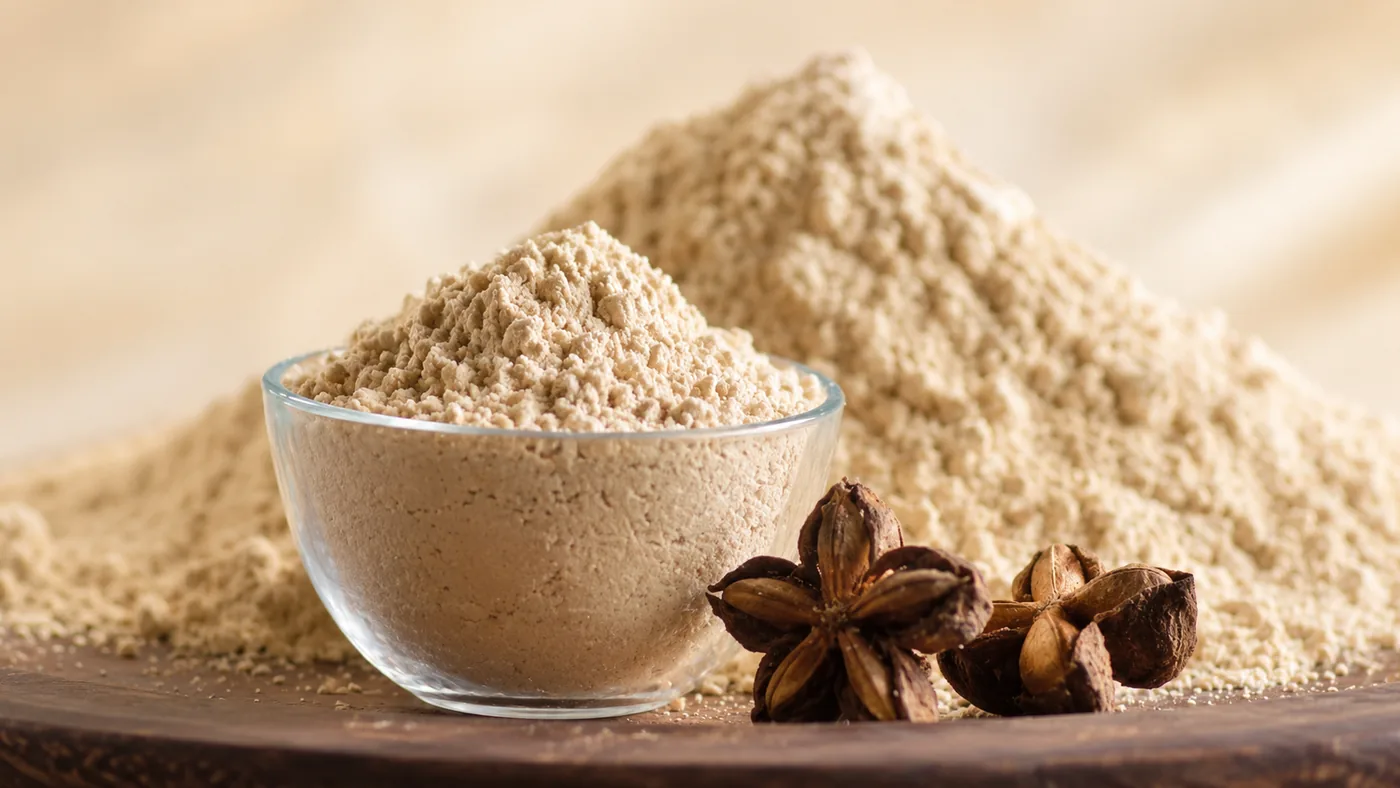
Short answer: no — rice protein is not a complete protein. It is limited in lysine, and that single gap is the reason rice protein is almost never sold as a standalone protein ingredient. It is the junior partner in a pea-rice blend, and understanding why tells you a lot about how plant protein formulation actually works.
The lysine gap
A complete protein delivers every essential amino acid at or above the level the body requires. The amino acid furthest below that reference is the limiting amino acid, and it caps how much of the total protein the body can put to use — however impressive the headline protein percentage looks.
For rice protein, that limiting amino acid is lysine. This is not a quirk of processing or of one supplier's isolate; lysine is the limiting amino acid across rice varieties, white and brown alike, because it is a property of the grain's storage proteins. A brown rice protein concentrate at 80% protein still carries the same gap as the rice it came from.
What rice protein is good at is the other end of the profile. It is comparatively rich in the sulphur-containing amino acids — methionine and cysteine — which is precisely where legume proteins run short. That complementarity is the whole basis of the pea-rice blend, and it is why rice protein has a durable place in the category despite being incomplete on its own.
How rice compares on the numbers
| Protein | Complete? | Limiting amino acid | Typical PDCAAS | Typical protein % |
|---|---|---|---|---|
| Rice protein | Incomplete | Lysine (low) | ~0.47 | ~80% |
| Pea protein | Near-complete | Methionine (low) | ~0.82 | ~80–85% |
| Soy protein | Complete | Adequate across EAAs | ~1.0 | ~90% |
| Sacha Inchi protein | All 9 EAAs present | Not short on the sulphur amino acids | Not published — request lot analysis | 54–62% |
The rice row is the instructive one. At around 80% protein it looks, on a spec sheet, like a stronger ingredient than a 54–62% complete protein. On usable protein delivered, it is not close. A PDCAAS of roughly 0.47 means a little under half of that impressive 80% is being counted as high-quality protein once the lysine shortfall is applied.
The pea-rice blend, and what a 2024 trial found
The standard industry answer to rice protein's lysine gap is to blend it with pea protein. Pea is low in methionine and rich in lysine; rice is the mirror image. Combined — commonly around 70:30 pea to rice — the two gaps cancel and the blend meets the essential amino acid reference that neither reaches alone. This is genuinely sound nutritional logic and it is why pea-rice is the most common architecture in commercial vegan protein powders.
It is worth knowing, though, that the theory has been tested directly and did not fully hold up. A 2024 randomised trial in the British Journal of Nutrition compared a pea-rice blend against pea isolate alone and whey in healthy young adults, and found that the blend did not raise post-meal plasma essential amino acid availability above pea protein on its own. The authors' explanation was straightforward: the pea isolate was already a high enough quality protein to meet WHO/FAO/UNU requirements, so there was little headroom for the rice fraction to add.
The practical reading for a formulator is not that blending is pointless — the blend still improves the amino acid table you print, and label claims are made against that table. It is that the blend's benefit is largely a paper benefit over a good pea isolate, while the costs are entirely real:
- a second raw material, supplier and specification to qualify, audit and re-qualify
- a second certificate of analysis and allergen statement per batch
- a blending and homogeneity step with its own QC and validation
- two commodity price exposures, and two supply chains that can each fail independently
When rice protein is still the right call
Incomplete does not mean unusable, and rice protein earns its place in plenty of formulations:
- As the methionine contributor in a designed blend, where its job is to fill a specific gap rather than to carry the product
- For texture and mouthfeel, where rice protein's behaviour in suspension is preferred
- For allergen positioning, where rice is a comfortable story for consumers wary of soy or legumes
- On cost, where rice protein concentrate is competitively priced against the protein it delivers in a blended matrix
What rice protein cannot do is carry an unqualified "complete protein" claim by itself.
The single-ingredient alternative
If the objective is a clean complete-protein claim without managing two raw materials, the shortlist is the plant proteins that are complete on their own. Soy is the established choice. Sacha Inchi protein is the newer one: it supplies all nine essential amino acids as a single ingredient, and unlike pea it is not short on the sulphur amino acids. We do not publish a protein quality score for it, because our certificate of analysis does not carry one — published values for Plukenetia volubilis protein vary, and lysine is reported as its limiting amino acid.
Its headline protein percentage is lower, at 54–62 g per 100 g, which is exactly the trade the table above is about: fewer grams of protein, a broader amino acid spread, and one specification instead of two. The defatted powder also carries 3–5 g of omega-3 ALA per 100 g, so a single ingredient can support both a protein and a plant-based omega-3 position.
For the underlying framework — the nine essential amino acids, limiting amino acids, and how PDCAAS folds digestibility into a single number — see our pillar guide: Complete vs. Incomplete Plant Proteins. For a direct side-by-side against the other half of the classic blend, see Sacha Inchi Protein vs. Pea Protein.
Bottom line
Rice protein is incomplete because it is short on lysine, and no amount of protein-percentage headroom changes that. Blending it with pea protein fixes the amino acid table and remains the industry default — but a 2024 human trial suggests the blend adds less over a quality pea isolate than the theory implies, while the sourcing, QC and supply chain costs of a second ingredient are unambiguous. Whether that trade is worth making depends on your claim, your cost model, and how much complexity your supply chain can absorb.
Frequently Asked Questions
Is rice protein a complete protein?
No. Rice protein contains all nine essential amino acids in trace amounts but is low enough in lysine to be classed as incomplete. Lysine is its limiting amino acid, and it is the reason rice protein is almost always blended rather than used alone.
What amino acid is rice protein low in?
Lysine. Rice protein is comparatively strong in the sulphur-containing amino acids methionine and cysteine, which is exactly where pea protein is weak — the reason the two are so often paired.
What is the PDCAAS of rice protein?
Rice protein is commonly reported at a PDCAAS of around 0.47, well below the 0.7 threshold generally treated as high-quality protein. The lysine shortfall is what holds the score down, not digestibility.
Is a pea and rice protein blend a complete protein?
On paper, yes. Pea supplies the lysine rice lacks and rice supplies the methionine pea lacks, and commercial pea-rice blends are formulated to meet the full essential amino acid reference. A 2024 human trial did find that the blend did not raise post-meal essential amino acid availability above pea protein alone, so the blend's advantage is mainly on the amino acid table rather than in measured absorption.
Is brown rice protein different from white rice protein?
Not in the way that matters here. Lysine is the limiting amino acid across rice varieties, so brown rice protein concentrate carries the same completeness gap as any other rice protein. Brown rice is the usual commercial starting material for protein concentrates and isolates.
What can I use instead of a pea-rice blend?
A plant protein that supplies all nine essential amino acids as a single ingredient. Soy is the established option; Sacha Inchi protein is the newer one, and unlike pea it is not short on the sulphur amino acids, so it does not need a second raw material to fill that gap.
Related Articles
Skip the Blend — Source a Single Complete Protein
Sacha Inchi protein is complete as one ingredient, with full amino acid documentation on the certificate of analysis. Request a sample or the spec sheet. USDA Organic certified. MOQ from 100 kg.
Request a Sample → View Full Protein Specs