Complete vs. Incomplete Plant Proteins: What Every Supplement Brand Needs to Know
Published on May 31, 2026 · By Caleb Lim, Founder · Asia Eco Farm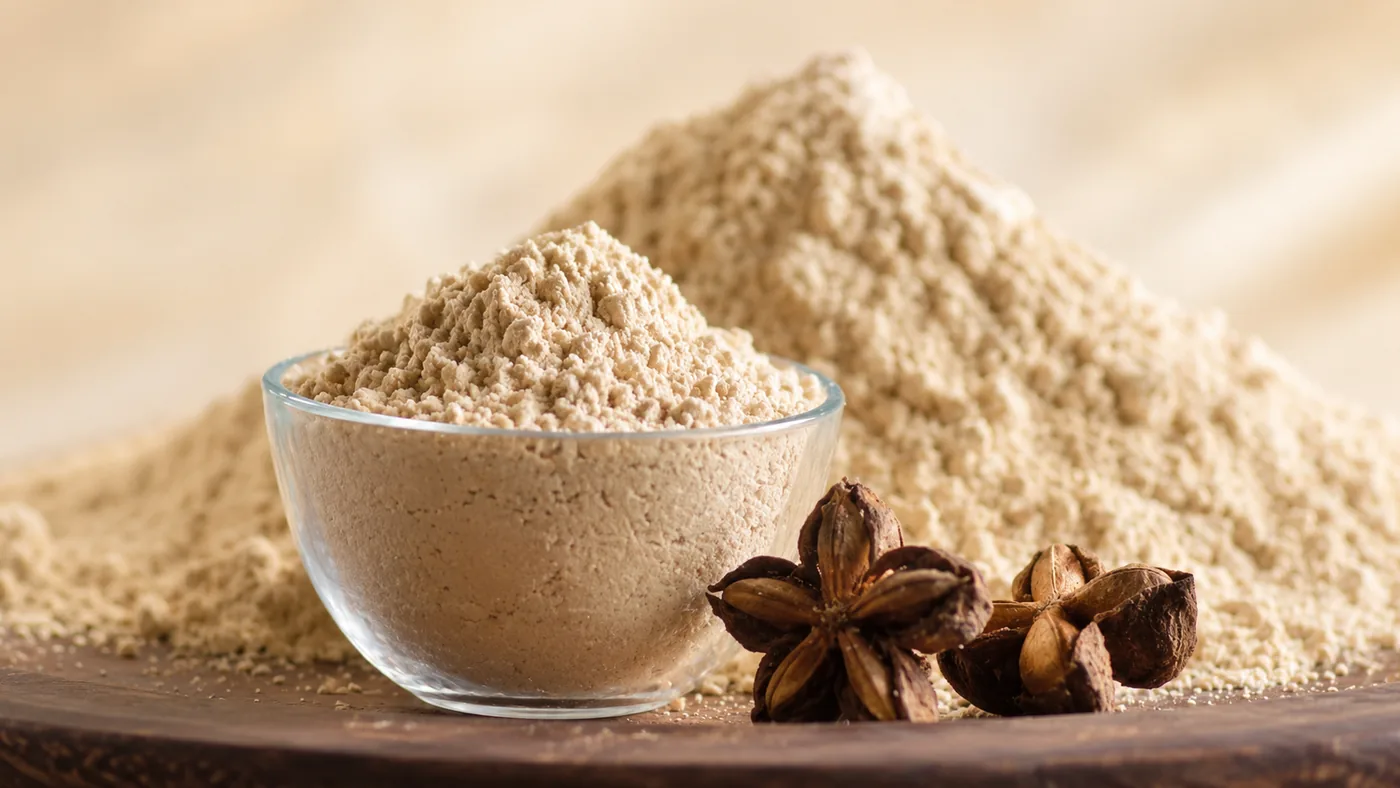
Not all plant protein is created equal. For a supplement brand, the single most important technical distinction between two plant-based protein ingredients is whether the protein is complete or incomplete — a difference that determines your amino acid label claims, whether you need to blend two raw materials, and ultimately how strong your product's nutritional story is on the shelf. Yet it is one of the most frequently misunderstood concepts in plant-based product development.
This guide explains what a complete plant-based protein actually is, why most plant proteins fall short, how to read the metrics that matter (EAAs and PDCAAS), and what all of this means when you are sourcing an ingredient for a private label protein product.
What Makes a Protein "Complete"?
A complete protein contains all nine essential amino acids (EAAs) in amounts sufficient to meet human dietary requirements. Essential amino acids are the ones the human body cannot synthesise on its own — they must come from food. They are: histidine, isoleucine, leucine, lysine, methionine, phenylalanine, threonine, tryptophan, and valine.
An incomplete protein is missing, or critically low in, one or more of these essential amino acids. The amino acid present in the lowest amount relative to what the body needs is called the limiting amino acid — it caps how effectively the body can use the rest of the protein, no matter how much total protein you consume.
Animal proteins (whey, casein, egg) are almost all complete. The challenge for plant-based brands is that most individual plant proteins are incomplete — which is exactly why ingredient selection matters so much.
Why Most Plant Proteins Are Incomplete
Plants did not evolve to feed humans, so their amino acid profiles rarely line up neatly with our requirements. Each major plant protein family tends to fall short on a specific amino acid:
| Plant Protein | Complete? | Limiting Amino Acid | Typical Protein % |
|---|---|---|---|
| Pea protein | Near-complete | Methionine (low) | ~80–85% |
| Rice protein | Incomplete | Lysine (low) | ~80% |
| Hemp protein | Incomplete | Lysine (low) | ~30–50% |
| Soy protein | Complete | Adequate across EAAs | ~90% |
| Faba bean protein | Near-complete | Methionine (low) | ~80% |
| Sacha Inchi protein | Complete | Adequate across all 9 EAAs | 54–62% |
This is why so many commercial vegan protein powders are blends. The classic example is pea + rice: pea protein is low in methionine but rich in lysine, while rice protein is the reverse — low in lysine but adequate in methionine. Combine the two and the gaps cancel out, producing a more complete profile than either could deliver alone. The trade-off is that you are now managing two raw materials, two suppliers, two specifications, and two sets of QC documentation.
The Two Metrics That Actually Matter: EAAs and PDCAAS
When you evaluate a protein ingredient on paper, two numbers tell you most of what you need to know.
1. Essential amino acid (EAA) profile. A spec sheet should list the milligrams of each amino acid per gram of protein. Compare these against the WHO/FAO reference pattern for adult requirements. If every EAA meets or exceeds the reference, the protein is complete. If one falls below, that is your limiting amino acid.
2. PDCAAS. The Protein Digestibility Corrected Amino Acid Score combines the amino acid profile with how well the protein is actually digested and absorbed. It runs on a scale from 0 to 1.0, where 1.0 is the maximum. Anything above 0.7 is generally considered a high-quality protein. A complete amino acid profile does not help if the body cannot digest the protein — PDCAAS captures both halves of the equation in a single figure.
Why Completeness Matters for Your Brand (Not Just Your Customers)
Protein completeness is not only a nutrition issue — it directly shapes your product economics and marketing claims:
- Label claims: A complete protein lets you legitimately claim "complete plant protein" or "all 9 essential amino acids" — claims that resonate strongly with informed consumers and that incomplete single-source proteins cannot make.
- Supply chain simplicity: A naturally complete protein removes the need to blend, source, and QC a second raw material. Fewer SKUs, fewer suppliers, fewer points of failure.
- Formulation cost: Blending to achieve completeness adds raw material, mixing, and testing costs. A single complete ingredient avoids them.
- Differentiation: "Pea protein" is a commodity claim on thousands of labels. A complete, novel plant protein is a differentiation story.
Where Sacha Inchi Protein Fits
Sacha Inchi (Plukenetia volubilis) protein supplies all nine essential amino acids from a single ingredient, and it is unusual among plant proteins in not being short on the sulphur amino acids — methionine and cysteine — that limit most legumes. That is the practical reason formulators look at it as an alternative to a two-protein blend.
On protein quality scores, be careful with any figure quoted from a brochure, ours included: published work on Plukenetia volubilis protein reports lysine as its limiting amino acid, and the PDCAAS values that circulate vary with the protein fraction tested. We no longer publish a score we cannot tie to a tested lot, and we would suggest holding every supplier to the same standard. What is well documented is a low level of anti-nutritional factors (phytates, trypsin inhibitors, lectins) compared with many legume proteins. Sacha Inchi protein also carries an advantage no other complete plant protein matches: the defatted powder still contains 3–5 g of omega-3 ALA per 100 g (4.0 g on our most recent tested lot), enough to show on a finished product’s nutrition panel, so one ingredient can support both a protein and a plant-based omega-3 position.
For brands comparing options in detail, we have published full head-to-head breakdowns: Sacha Inchi Protein vs. Pea Protein and Sacha Inchi Protein vs. Whey Protein. If you are weighing plant-based omega-3 sources more broadly, see Sacha Inchi vs. Flaxseed and Sacha Inchi vs. Chia Seeds.
How to Choose a Complete Plant Protein for Private Label
When you are sourcing a plant protein for a private label product, run this checklist:
- Request the full amino acid profile — not just total protein %. Check every EAA against the WHO/FAO reference yourself, and ask whether the figures come from a tested lot or from the literature.
- Ask for PDCAAS (or DIAAS if available) to confirm digestibility, not just composition.
- Decide single-source vs. blend. A complete single ingredient simplifies your supply chain; a blend may be needed if you are committed to an incomplete protein for other reasons.
- Check certifications relevant to your market — USDA Organic, HACCP, GMP — and confirm allergen status for your target regions.
- Confirm regulatory status in every market you sell into (see the EU note below).
- Match flavour to format. Earthy or beany proteins raise masking costs in lightly flavoured products; milder proteins keep formulations clean.
OEM Sourcing: Complete Plant Protein from Asia Eco Farm
Asia Eco Farm supplies complete, organic Sacha Inchi protein powder from our integrated operations in Malaysia and Laos. Standard product specifications:
- Protein content: 54–62 g/100g (defatted, gelatinized), all nine EAAs present
- Certifications: USDA Organic · HACCP · GMP
- MOQ: 100 kg for initial SKU launches
- Packaging: Mylar (aluminium foil) bags; custom private label available
- Applications: Protein powders, meal replacements, protein bars, nutritional beverages, sports nutrition capsules
- Lead time: 4–6 weeks standard; rush available on request
We supply both bulk ingredient and turnkey private label formats, with in-house QC testing, full amino acid documentation, and batch records included.
Frequently Asked Questions
What is a complete protein?
A complete protein supplies all nine essential amino acids — histidine, isoleucine, leucine, lysine, methionine, phenylalanine, threonine, tryptophan and valine — in amounts that meet human dietary requirements. Most animal proteins are complete; most single-source plant proteins are not.
What is the difference between complete and incomplete protein?
A complete protein meets the requirement for every essential amino acid. An incomplete protein is low in at least one, called the limiting amino acid, which caps how well the body can use the rest of the protein regardless of total intake.
Are plant proteins complete proteins?
Most are not. Soy and sacha inchi are among the few single-ingredient plant proteins that are complete. Pea and faba bean are near-complete but low in methionine; rice and hemp are low in lysine. This is why many vegan protein powders blend two sources.
Is pea protein a complete protein?
Pea protein is near-complete. It contains all nine essential amino acids but is low in methionine, so it is usually blended with rice protein — which is low in lysine but adequate in methionine — to close the gap.
Are chia seeds a complete protein?
Yes. Chia provides all nine essential amino acids, though its total protein content is low (about 17% by weight), so it contributes little usable protein per serving compared with a concentrated protein powder.
Is sacha inchi protein a complete protein?
Sacha Inchi (Plukenetia volubilis) protein supplies all nine essential amino acids from a single ingredient, and is unusual among plant proteins for being strong in the sulphur amino acids methionine and cysteine that limit most legumes. Published analyses report lysine as its limiting amino acid, and protein quality scores in the literature vary, so ask any supplier for lot-specific amino acid analysis rather than relying on a published score.
Do you need to combine plant proteins to get a complete protein?
Only if you start from an incomplete protein. Blending pea with rice, or legumes with grains, produces a complete profile from two incomplete sources. A naturally complete protein such as soy or sacha inchi removes the need to blend.
Related Articles
Want a Complete Plant Protein for Your Next Product?
Request a sample or full spec sheet with complete amino acid documentation. USDA Organic certified. MOQ from 100 kg. Our OEM team handles everything from spec to private label production.
Request a Sample → View Full Protein Specs